
Course Syllabus Entry & Maintenance Guide
1. Submission Timeline
Instructors are kindly requested to complete the syllabus update before the start of the semester. It is strongly recommended to finalize it prior to the first course selection period to assist students and mentors in course planning.
As the course syllabus serves as the primary reference for students choosing classes, it should remain stable once published. Instructors can modify the contents at any time via the Academic Information System while it is open; however, the system will be locked and changes will no longer be permitted after the add/drop deadline.
2. Syllabus Entry & Maintenance Guide
Please follow the steps below to access the system and choose the maintenance method that best suits your needs:
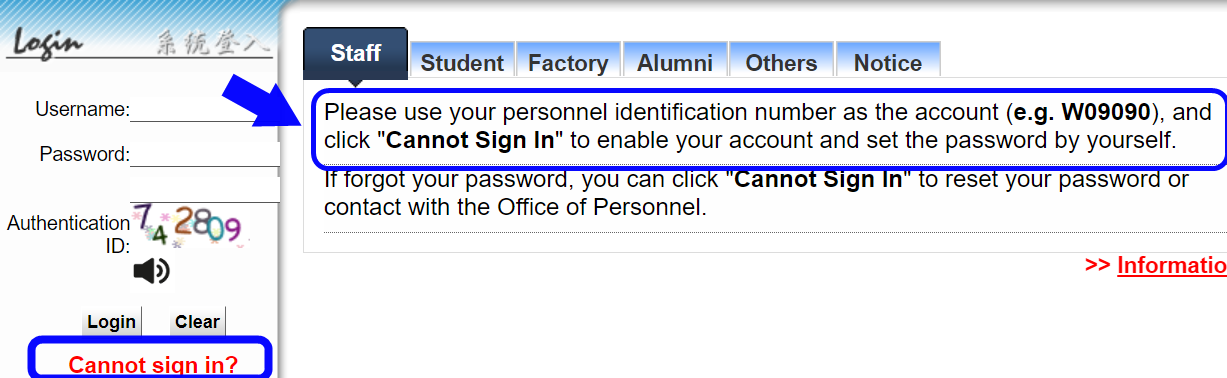
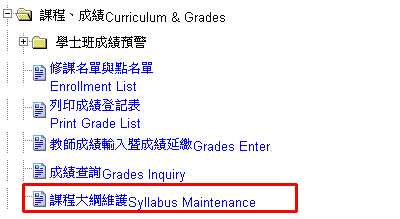
- Log in to the NTHU Academic Information System (AIS) → click on the "Curriculum & Grades" menu → select "Syllabus Maintenance".
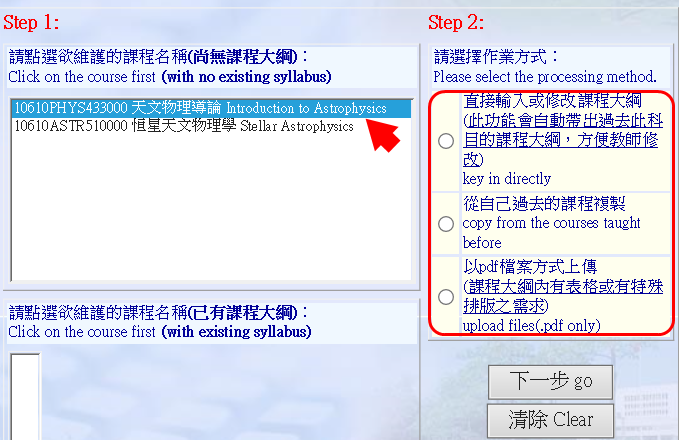
- Select the semester and the course title you wish to edit, then choose one of the following three methods to establish your syllabus:
The system will automatically import previous syllabus content for the course. Instructors only need to adjust specific fields, making it highly convenient to carry over for future semesters.
Instructors can directly import complete syllabus data from another similar course they have previously taught in a specific semester.
If your syllabus includes intricate mathematical formulas, precise charts, or distinct formatting requirements, you may choose to convert it into a PDF and upload it directly.
- After completing your edits, please remember to click the "Save" button before exiting the page.
To maintain data security, the AIS has a session timeout policy. If the page is left **idle for more than 30 minutes without clicking or submitting, you will be automatically logged out**. If your text is extensive, please click "Save" periodically to prevent data loss.
📸 Step-by-Step Screenshots
3. Course Outline Requirements
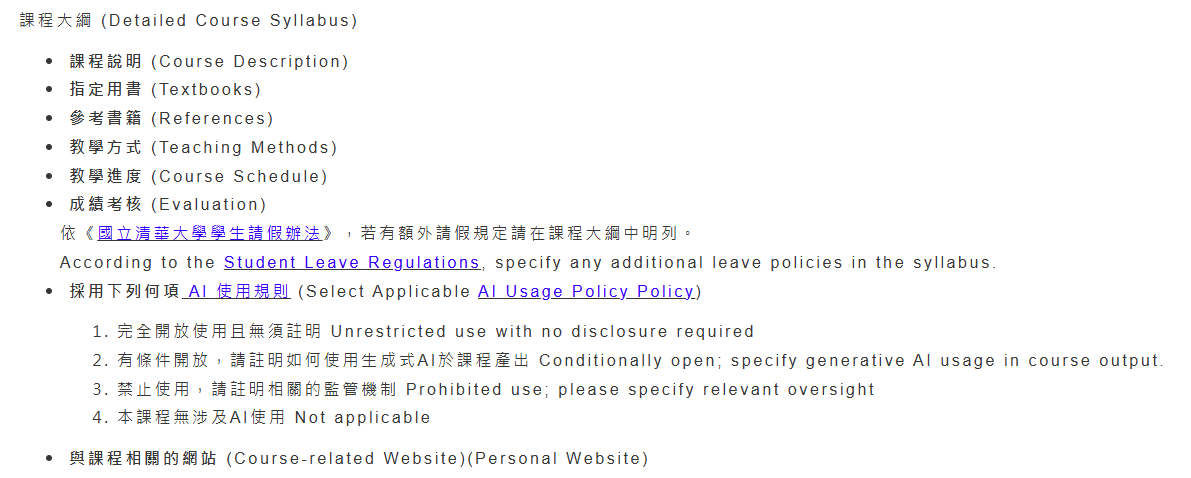
Pursuant to Academic Affairs Committee resolutions, a comprehensive syllabus should strictly cover the following essential elements to preserve student enrollment rights:
- Course Description: A general introduction, academic keywords, and structural content of the course.
- Required Textbooks: Core textbooks, mandatory readings, and supplementary references.
- Teaching Schedule: A clear weekly timeline specifying topic arrangements and lecture methodologies.
- Grading Criteria: Transparent evaluation standards. Any special attendance penalties must be clearly stated here.
- AI Usage Guidelines: Clearly indicate or describe the rules governing students’ use of AI in the course (e.g., Fully Open, Conditional, Prohibited, or Not Applicable). Please refer to the following guidelines:
- Integrating Ethical Guidelines for Generative AI into NTHU Course Syllabi
- NTHU Implementation Guidelines on AI Ethics Statements and Learning Assessment
- NTHU Implementation Guidelines on AI Ethics Statements and Learning Assessment – Quick Guide
- English-taught courses must provide a full English version of the syllabus.
- Chinese-taught courses are mainly in Chinese (bilingual versions are encouraged). An English-only syllabus for Chinese-taught courses is also acceptable.
- Course Withdrawal: If withdrawal (drop) from the course is not permitted, this must be explicitly noted in the syllabus. *(Based on resolutions of the Academic Affairs Meetings).*
- Personal Data Protection: As the public inquiry system is an open platform, please strictly adhere to the Personal Data Protection Act. Do not publish personal phone numbers or ID numbers of TAs or students in the syllabus. If contact info is needed, provide it verbally in class or post it on the secure eeclass platform.
4. Student Absences, Grading, and Regulations
To avoid potential academic grading disputes due to insufficient disclosure, please pay close attention to attendance and makeup exam policies. Relevant regulatory bodies are listed below:
- Student leaves of absence and classifications: Student Life Division, Office of Student Affairs
- Academic grading evaluation and appeals: Registration Division, Office of Academic Affairs
- Maintaining Syllabus Stability
The published syllabus is viewed as an "academic contract" between the instructor and students. Critical mechanisms such as **grading percentages, midterm/final makeup exam rules, and attendance deduction scales** must be finalized before classes commence and remain unchanged thereafter. - Attendance Deduction and Limits (Crucial Regulatory Policy)
Pursuant to Article 32 of the NTHU Academic Regulations: If a student's officially approved absences accumulate to **less than one-fourth (25%)** of the total course hours for the semester, their attendance score should not be penalized. **Instructors may implement stricter policies due to unique course needs, provided that "such rules are explicitly specified in the syllabus in black and white."** If unlisted, general academic regulations apply.
Please note that the updated Student Leave Policy (including Mental Health Leave and other new leave categories) is in full effect. Instructors are requested to align their policies with these university-wide regulations.
Due to the official calendar arrangement for the Fall 2026 semester, **classes scheduled on Fridays will be affected by 3 national holiday closures.** Instructors with Friday sessions are kindly requested to take these closures into consideration when structuring your weekly teaching schedule (e.g., adjusting the lecture pace, planning asynchronous online learning, or arranging makeup classes) to ensure the complete delivery of course contents.
5. Reference Examples & Document Downloads
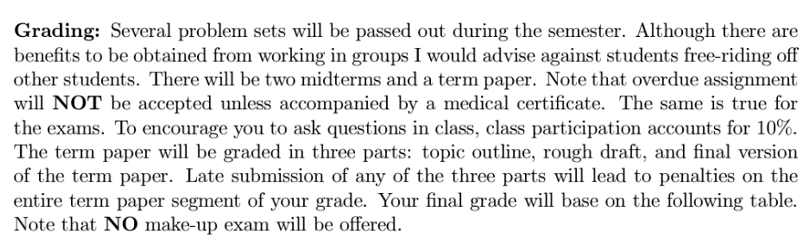
The following screenshots are excerpts from outstanding syllabi within the university (General Linguistics and Econometrics II). Their evaluation breakdown and absence policies are explicitly described to prevent cognitive gaps and disputes:

📥 Download Blank Template for Offline Editing
If you prefer to draft your text offline before uploading it to the system, you may download the official blank template for the current semester:
Top ▲